Coverage line
General Liability Insurance for Fiber Optic Contractors
The foundation policy for fiber crews — third-party bodily injury and property damage from open trenches, bores, aerial work, and public-right-of-way exposure, with the pollution and E&O seams explained plainly.

General liability is the coverage that answers for the people and property around your work — not your own crew, and not your own equipment, but everyone else who can be hurt or have something damaged while you trench, bore, hang strand, or splice fiber. For a commercial fiber contractor it is the foundation policy: the one primes and broadband subgrantees want to see first, the one your certificate-of-insurance and additional-insured requirements are built on, and the one that decides whether a third-party claim is a phone call or a lawsuit you pay out of pocket.
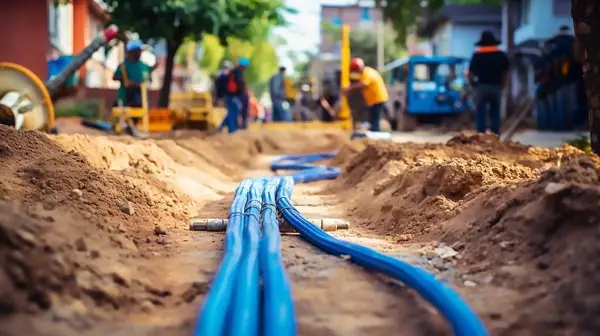
Fiber work concentrates third-party risk in ways a generic contractor policy was never written for. An open trench in a public right-of-way is a hazard on ground you do not own. A directional bore travels blind under streets, yards, and utility corridors. Aerial work puts a bucket truck and a crew over roads and property. A policy rated to "general contractor" misses the shape of all of it — and, just as importantly, leaves two signature fiber exposures sitting in the seams the form does not cover. We write general liability to the way directional, aerial, and splice operations actually run, and we name the seams out loud.
What it covers — and what it does not
General liability responds to third-party bodily injury and property damage arising from your operations, on the job site and after the job is done. For a fiber contractor that means injuries to a property owner, a member of the public, or a bystander near your work; damage to driveways, landscaping, structures, and adjacent property along the route; and — through completed-operations coverage — claims that surface after your crew has demobilized.
What general liability does not do matters just as much, because this is where fiber contractors get surprised. It does not cover injuries to your own crew; that is workers compensation. It does not cover your own drill rig, bucket truck, locators, or fusion splicers; that is contractors equipment. It does not cover an accident in your truck or with your drill trailer on the way to the bore; that is commercial auto. And — the two that define fiber work — it does not answer for a pollution release from a bore strike or frac-out, and it does not answer for a purely financial loss from a faulty splice or spec error. Those last two are the seams, and they each have their own page below.
The two seams general liability leaves open
This is the part worth being precise about, because both seams look like they should be covered and are not. The first is pollution. When a directional bore strikes a gas, sewer, or fuel line — or when your bore produces a frac-out, drilling fluid surfacing where it should not — the resulting release is an environmental loss, and the standard general liability form carries an absolute pollution exclusion that drops it cleanly. The struck pipe might be a general liability conversation; the gas, the sewage, the bentonite in the creek is not. That exclusion is exactly why underground fiber crews carry a separate pollution liability policy, and it is the signature exposure of directional work.
The second seam is professional liability. A faulty fusion splice, a network spec error, or an as-built that does not match what is in the ground can cost a prime real money — rework, delay, a failed acceptance test — without physically damaging anyone’s property. General liability is built for physical injury and property damage; a purely financial loss from your professional work falls through it. That is what professional liability (errors and omissions) is for, and it is the signature exposure of splice work. A crew that bores and splices needs general liability for the physical exposures and these two lines for the seams — written together, not assumed into one form.
How general liability works specifically for fiber contractors
What separates fiber work from ordinary contracting is that the exposure travels — under the street, up the pole, and across state lines — usually on ground and property the contractor does not control. An open trench left over a weekend is a premises hazard your crew created in a public right-of-way. A directional bore moves blind past unlocated utilities even after a clean locate. An aerial crew sets a bucket truck over a road and works at height near energized lines. General liability is the line that responds when a third party is the one harmed across any of those.
Because the exposure differs by operating model, the policy form has to fit the model. A directional drilling operation carries a utility-strike and right-of-way profile through Directional Drilling Insurance. An aerial installation operation carries a height-and-roadway profile. A precision splice operation carries comparatively little heavy-equipment exposure but the heaviest professional-liability seam. Writing all three off one generic contractor form underprices one and leaves another exposed. We rate each to the real work and pair it with the right seam coverage.
Common claim categories
These are the categories underwriters expect on a fiber-contractor general liability file. They are described qualitatively and with generic carrier language — every claim is handled by the carrier, never named here.
- Premises injury at an open job site. Someone is hurt at an open trench, around a staged bore, or near a bucket truck and the equipment your crew left in a public right-of-way. The exposed-excavation nature of fiber work makes this the category carriers watch most closely.
- Property damage along the route. Trenching, boring, or restoration damages a property owner’s driveway, landscaping, irrigation, or structure — or an adjacent owner’s lot — where your work crosses their ground.
- Right-of-way and third-party property claims. Open-ground work in a public or shared corridor damages surfaces, utilities, or improvements a third party is responsible for, and the claim flows to your operations.
- Completed-operations allegations. After your crew demobilizes, a defect is alleged to have caused resulting physical damage. How the form treats completed operations decides the outcome — and a purely financial rework demand is a professional-liability question, not this one.
Limits and structure
General liability is usually written with a per-occurrence limit and a separate aggregate that caps total payouts for the policy term, often with products-and-completed-operations tracked on its own aggregate. The right structure for your operation is driven by the work you do and the contracts you sign — whether you bore, hang, or splice, the size and type of jobs, the additional-insured and limit requirements your primes and broadband subgrantees impose, and your claims history. Rather than quote a number, we read what your prime contracts actually demand and build the limit and endorsement structure to satisfy them. Where a job or a prime contract calls for limits above your primary layer, that is what umbrella liability is for, sitting excess of this policy.
Why Fiber Optic Guard Insurance
We are an independent agency that writes one trade — commercial fiber optic contractors — and we place coverage with carriers that actually want the class. That focus is the point. We know to ask whether you bore, hang, or splice before we quote; to read the absolute pollution exclusion against your directional work; to separate the professional-liability seam from the general liability so a financial-loss claim is not stranded; and to set the additional-insured and certificate requirements that keep a prime’s requirement from stalling your start. When a prime contract or a BEAD scope lands on your desk with insurance requirements you do not recognize, that is a call we take. Start with a quote, or talk it through with us first.
Learn more
Coverage questions, answered
- Does General Liability Cover a Directional Drill Hitting a Gas Line?
- Does GL Cover Damage to Third-Party Underground Utilities?
- Does General Liability Cover a Subcontractor’s Mistake on a Fiber Job?
- General Liability vs. Professional Liability for a Fiber Spec Error
Fiber-contractor coverage works as a system. General liability pairs most often with commercial auto for the trucks and drill trailers running your route, workers compensation for your crew, and umbrella liability when a prime contract demands limits above your primary layer — and it leaves the two signature fiber seams, pollution liability and professional liability, to their own policies. How it is written also differs by operating model across the three fiber pillars.
Coverage for fiber contractors
- Directional Drilling Insurance
- Overhead Fiber Installation Insurance
- Fiber Splicing Insurance
- Where we write — 48 states
Primary sources
Frequently asked questions about General Liability Insurance
What does general liability cover on a fiber job site?
General liability responds to third-party bodily injury and property damage that arise from your work — a member of the public hurt at an open trench or staged bore, damage to a property owner’s driveway, landscaping, or structure along the route, and right-of-way damage where your crew opens ground. It does not cover injuries to your own crew, your own drill rig or splicers, or your own trucks — those sit under workers compensation, contractors equipment, and commercial auto.
Does general liability cover a directional bore striking a gas or sewer line?
Usually not in the way contractors assume. The physical damage to a struck line can be a general liability matter, but the moment the strike releases gas, sewage, fuel, or contaminants — or your bore produces a frac-out where drilling fluid surfaces — you are in pollution territory, and the standard general liability form carries an absolute pollution exclusion that drops it. That gap is exactly why directional crews carry a separate pollution policy. We read the exclusion against your bore work and place pollution liability alongside the general liability so the underground exposure is not stranded.
Does general liability cover a bad splice or an as-built error?
Not when the loss is purely financial with no physical damage to point to. A faulty fusion splice, a network spec error, or an as-built that does not match the field can cost the prime real money — rework, delay, a missed acceptance test — without anyone’s property being physically damaged. That is a professional liability (errors and omissions) exposure, and general liability is built to answer for physical injury and property damage, not financial loss from professional work. A splice-heavy operation needs both lines in force.
Why do primes and BEAD subgrantees ask to be named on my general liability?
Because your work happens on their project and a third-party claim can reach them. Prime contractors, property owners, and broadband subgrantees commonly require a certificate of insurance and additional-insured status on your general liability before you mobilize. We set those endorsements and the certificate language to match what your prime contract demands, so a coverage requirement does not stall your start or cost you the work.
Do I still need general liability if I carry workers compensation?
Yes — they cover different people. Workers compensation pays for injuries to your own crew. General liability protects you when a third party — a property owner, a member of the public, someone near your job site — is injured or has property damaged by your work. A fiber contractor running real bores, aerial spans, and splice work carries both, usually alongside commercial auto and contractors equipment.
Does general liability follow my crew when we travel to another state?
A properly written general liability policy is built around your operations rather than a single address, and its area served reflects where you work — which matters for crews that live in one state and follow the work into others. The detail that catches traveling fiber contractors is usually workers compensation and auto, not general liability, but the way your general liability schedules operations and territory still needs to match where your bores and spans actually happen. We build the policy to the multi-state reality instead of a single home base.
Does general liability pay to redo my own faulty work?
Standard general liability is built to respond to resulting third-party damage, not to redo your own defective work — the classic "your work" exclusion. Completed-operations language and the way the form treats damage caused by faulty work both matter here and vary by form. A purely financial rework demand with no physical damage is a professional liability question, not a general liability one. We read the actual wording against the way your crews bore, hang, and splice rather than rating you off a generic contractor form.
Get general liability built for the way your crews work
Tell us whether you bore, hang, or splice and we will market it to carriers that write the fiber-contractor class — with the pollution and E&O seams covered, not assumed.